The Total Cost of Ownership of Commercial EV Charging Equipment
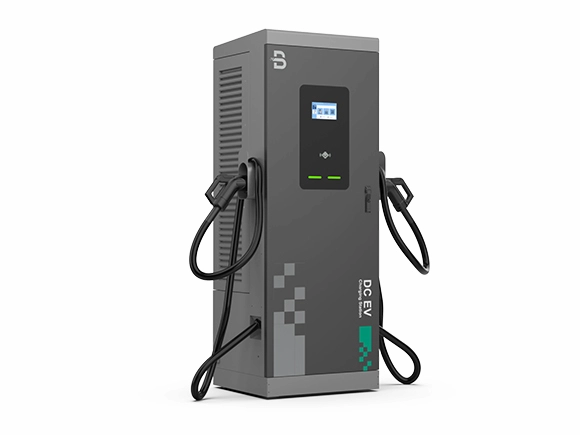
The purchase price of a charger is only one part of a commercial charging budget. Grid work, civil construction, communications, software, electricity tariffs, maintenance, and downtime can determine whether a project remains affordable after commissioning. A useful total cost of ownership model separates these costs, applies them to the expected operating life, and tests several utilization scenarios instead of relying on one headline figure.
The model should begin with the service the site must deliver. A workplace may need reliable charging over several hours, while a public fast-charging site may depend on short sessions and high availability. These use cases require different equipment, electrical capacity, payment functions, and support. Comparing costs before defining the operating requirement often produces a cheap design that does not meet demand or an expensive design that remains underused.
Build the capital cost baseline
Capital costs include the charging equipment, switchgear, transformer work where required, cabling, conduits, foundations, trenching, bollards, signage, lighting, communications, permits, design, commissioning, and utility fees. Site conditions can move the result more than the charger price. A long cable route, difficult excavation, limited switchboard space, or delayed utility upgrade can change both cost and schedule.
Allow for future phases without installing every charger immediately. Spare conduits, switchboard provisions, communications capacity, and a layout that can accept additional bays may cost less than reopening finished ground later. The decision should be based on a credible growth plan; unused capacity has a carrying cost, while undersized infrastructure creates rework.
Model operating cost and revenue exposure
Operating costs can include electricity, demand charges, network subscriptions, SIM or data service, payment processing, software licenses, inspections, cleaning, preventive maintenance, corrective repairs, spare parts, and customer support. Electricity should be modeled with the actual tariff structure and expected charging profile. A high-power site can face very different costs when sessions coincide with a facility peak.
For revenue-generating sites, utilization, price, payment fees, parking rules, and charger availability belong in the same model. Avoid assuming that every port earns revenue at nameplate power throughout the day. Vehicle charging curves, dwell time, queue behavior, and local demand limit delivered energy. Run low, expected, and high-utilization cases and identify the break-even assumptions that matter most.
Compare equipment on lifecycle value
A broad view of available charger formats and power levels is available at https://www.beny.com/ev-charger/ for buyers building an initial equipment shortlist. The comparison should then move beyond rated output to service access, modularity, environmental limits, backend compatibility, warranty coverage, replacement lead time, and local technical support.
Downtime has a cost even when the charger itself is under warranty. The site may lose revenue, miss fleet departures, or require staff intervention. Define the response time, repair target, parts availability, remote-diagnostic process, and responsibility for site visits. A slightly higher initial cost may be justified when the service model reduces operational risk, but that conclusion should come from documented assumptions rather than a general claim about quality.
Use the model as a procurement tool
Ask bidders to populate the same cost structure and state all exclusions. Keep hardware, installation, recurring fees, energy, maintenance, and end-of-life assumptions visible. Test the result against changes in utilization, electricity price, demand charges, failure rate, and expansion timing.
The final model should support a decision, not create false precision. Record the source and date of each assumption, assign an owner to uncertain items, and update the calculation after design, utility review, and pilot operation. This makes total cost of ownership a working control for the project rather than a one-time spreadsheet attached to the purchase order.