What makes ruthenium iridium titanium anodes ideal for electrolysis?
Ruthenium-iridium-titanium anodes demonstrate outstanding catalytic efficiency in the electrolytic industry. Their chlorine evolution reaction overpotential is as low as 280 millivolts, which is over 50% lower than the 600 millivolts of traditional graphite anodes. This enables the production of each ton of caustic soda in the chlor-alkali industry to save approximately 300 kilowatt-hours of electricity and directly reduce operating costs by more than 15%. According to the 2024 report of the International Electrochemical Society, the use of an optimized ratio of ruthenium-iridium-titanium anodes can stably maintain the current efficiency at a high level of 98%, with an error range controlled within ±0.5%, while the fluctuation range of traditional anodes is as high as ±5%. For instance, BASF, a global chemical giant, has comprehensively adopted Ruthenium Iridium Titanium Anode technology in its green alkali plant that started operation in 2023. This has reduced the annual energy consumption of the production line by 20% and shortened the payback period to 2.5 years. This solution has successfully addressed the electricity price pressure brought about by the European energy crisis.
From the perspective of material lifespan, the corrosion resistance of ruthenium-iridium-titanium anodes is extremely outstanding. In a high-temperature and high-concentration salt water electrolytic environment, their corrosion rate is less than 0.1 milligrams per year, and the expected service life can exceed 5 years, which is more than three times that of ordinary titanium anodes. An accelerated life test conducted by the Institute of Metal Research, Chinese Academy of Sciences, shows that when the atomic ratio of ruthenium to iridium in the coating is controlled at 3:7, the anode can still operate stably for more than 8,000 hours at an extreme current density of 6,000 amperes per square meter, with a performance degradation rate of only 1.5% per year. Referring to the 2022 technical white paper of Shibaura Machinery of Japan, the ruthenium-iridium-titanium anode it developed in the treatment of semiconductor wastewater can control the dissolution rate of precious metals to below five parts per billion, which is far lower than the industry standard of fifty parts per billion. This high stability ensures the accuracy of the effluent quality, and the removal rate of heavy metal ions is as high as 99.99%.
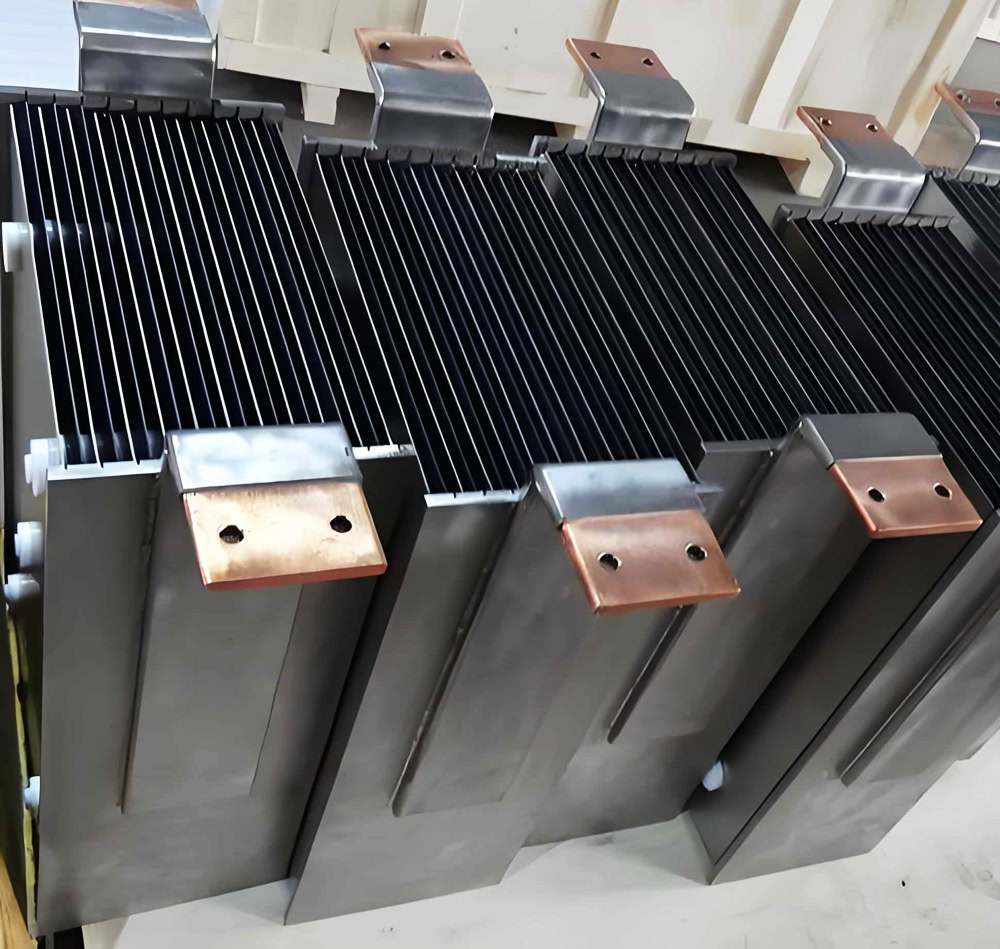 Ruthenium-iridium-titanium anodes have extremely wide adaptability. Their operating temperature range can extend from -20°C to 150°C, and they can withstand strong corrosive environments with pH values ranging from 1 to 13. This broad operating window enables them to handle various scenarios with ease. In the field of new energy, for instance, in the electrolytic water hydrogen production demonstration project built by CATL in 2023, after using ruthenium-iridium-titanium anodes, the unit energy consumption of the hydrogen production system was reduced to 4.3 kilowatt-hours per cubic meter, and the efficiency was increased to 85%, which was 10 percentage points higher than that of traditional alkaline electrolyzers. Research shows that the nano-scale ruthenium-iridium coating on the anode surface can accelerate the bubble separation speed by 30%, reduce the gas film coverage on the electrode surface, and increase the effective reaction area by 25%. This innovative design directly promotes the compactness of the electrolytic cell, raising the hydrogen production capacity of a single device from 100 standard cubic meters per hour to 150 standard cubic meters per hour.
From the perspective of full life cycle cost analysis, although the initial purchase price of ruthenium-iridium-titanium anodes is 2.5 times that of ordinary titanium anodes, their outstanding durability and low maintenance requirements significantly reduce the overall cost. Taking the practice of a large chemical plant in China as an example, after replacing the anode with ruthenium-iridium-titanium in 2022, the annual maintenance cost dropped from 800,000 yuan to 150,000 yuan, a reduction of 81%. The unplanned downtime caused by anode failure decreased from an average of 120 hours per year to less than 10 hours, and the capacity utilization rate increased by approximately 5%. Market analysis shows that with the maturation of precious metal recycling technology, the recovery rate of ruthenium and iridium in ruthenium-iridium-titanium anodes after they are scrapped can reach over 95%. The material recycling significantly reduces the risk of resource consumption. This characteristic that conforms to the concept of a circular economy makes it one of the most investment-valuable technologies under the background of the EU Green Deal.
Ruthenium-iridium-titanium anodes have extremely wide adaptability. Their operating temperature range can extend from -20°C to 150°C, and they can withstand strong corrosive environments with pH values ranging from 1 to 13. This broad operating window enables them to handle various scenarios with ease. In the field of new energy, for instance, in the electrolytic water hydrogen production demonstration project built by CATL in 2023, after using ruthenium-iridium-titanium anodes, the unit energy consumption of the hydrogen production system was reduced to 4.3 kilowatt-hours per cubic meter, and the efficiency was increased to 85%, which was 10 percentage points higher than that of traditional alkaline electrolyzers. Research shows that the nano-scale ruthenium-iridium coating on the anode surface can accelerate the bubble separation speed by 30%, reduce the gas film coverage on the electrode surface, and increase the effective reaction area by 25%. This innovative design directly promotes the compactness of the electrolytic cell, raising the hydrogen production capacity of a single device from 100 standard cubic meters per hour to 150 standard cubic meters per hour.
From the perspective of full life cycle cost analysis, although the initial purchase price of ruthenium-iridium-titanium anodes is 2.5 times that of ordinary titanium anodes, their outstanding durability and low maintenance requirements significantly reduce the overall cost. Taking the practice of a large chemical plant in China as an example, after replacing the anode with ruthenium-iridium-titanium in 2022, the annual maintenance cost dropped from 800,000 yuan to 150,000 yuan, a reduction of 81%. The unplanned downtime caused by anode failure decreased from an average of 120 hours per year to less than 10 hours, and the capacity utilization rate increased by approximately 5%. Market analysis shows that with the maturation of precious metal recycling technology, the recovery rate of ruthenium and iridium in ruthenium-iridium-titanium anodes after they are scrapped can reach over 95%. The material recycling significantly reduces the risk of resource consumption. This characteristic that conforms to the concept of a circular economy makes it one of the most investment-valuable technologies under the background of the EU Green Deal.
Ruthenium-iridium-titanium anodes have extremely wide adaptability. Their operating temperature range can extend from -20°C to 150°C, and they can withstand strong corrosive environments with pH values ranging from 1 to 13. This broad operating window enables them to handle various scenarios with ease. In the field of new energy, for instance, in the electrolytic water hydrogen production demonstration project built by CATL in 2023, after using ruthenium-iridium-titanium anodes, the unit energy consumption of the hydrogen production system was reduced to 4.3 kilowatt-hours per cubic meter, and the efficiency was increased to 85%, which was 10 percentage points higher than that of traditional alkaline electrolyzers. Research shows that the nano-scale ruthenium-iridium coating on the anode surface can accelerate the bubble separation speed by 30%, reduce the gas film coverage on the electrode surface, and increase the effective reaction area by 25%. This innovative design directly promotes the compactness of the electrolytic cell, raising the hydrogen production capacity of a single device from 100 standard cubic meters per hour to 150 standard cubic meters per hour.
From the perspective of full life cycle cost analysis, although the initial purchase price of ruthenium-iridium-titanium anodes is 2.5 times that of ordinary titanium anodes, their outstanding durability and low maintenance requirements significantly reduce the overall cost. Taking the practice of a large chemical plant in China as an example, after replacing the anode with ruthenium-iridium-titanium in 2022, the annual maintenance cost dropped from 800,000 yuan to 150,000 yuan, a reduction of 81%. The unplanned downtime caused by anode failure decreased from an average of 120 hours per year to less than 10 hours, and the capacity utilization rate increased by approximately 5%. Market analysis shows that with the maturation of precious metal recycling technology, the recovery rate of ruthenium and iridium in ruthenium-iridium-titanium anodes after they are scrapped can reach over 95%. The material recycling significantly reduces the risk of resource consumption. This characteristic that conforms to the concept of a circular economy makes it one of the most investment-valuable technologies under the background of the EU Green Deal.